
Winners and Losers in the China-US Trade War Truce
Winners and Losers in the China-US Trade War Truce the long-standing economic skirmish between the world’s two largest economies—China and the United States—has, for the time being, reached an uneasy truce. This détente in the China-US trade war has far-reaching implications that reverberate through industries, governments, and global markets. While tariffs have been scaled back and negotiations promise renewed cooperation, the outcome is far from binary. Instead, this truce has birthed an intricate web of winners and losers whose fortunes pivot on the intricate choreography of global trade diplomacy.
The phrase “winners and losers China US trade” encapsulates the shifting balance of economic power, corporate opportunity, and geopolitical influence. This article unpacks the nuanced beneficiaries and casualties of the current trade thaw, sector by sector and stakeholder by stakeholder.
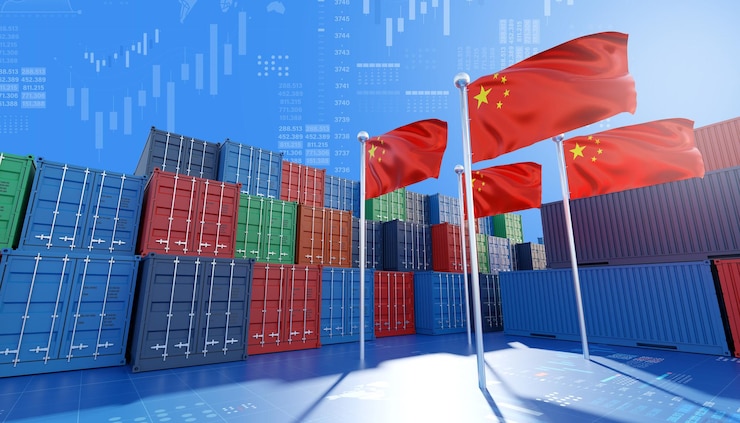
The Political Architects: Leaders as Winners and Losers
At the political echelon, the winners and losers China US trade narrative starts with national leadership. On the surface, both President Xi Jinping and President Joe Biden can claim strategic victories. Each has secured concessions that resonate with domestic constituencies and global observers.
For China, the lifting or easing of several punitive U.S. tariffs is a reprieve for key export sectors, especially at a time when the Chinese economy faces internal pressures like a sluggish property market and softening consumer demand. Xi’s administration can portray the agreement as a triumph of diplomatic resilience—a testament to China’s steadfast refusal to capitulate under American economic coercion.
For Biden, the truce offers a diplomatic victory without appearing weak. By maintaining some tariffs and linking reductions to compliance with certain standards—like intellectual property enforcement and market access—his administration placates domestic manufacturers and labor unions. Politically, he walks a fine line between conciliation and deterrence.
Yet the loser column still holds names. Political hawks in both nations—those advocating for hardline stances—may view the truce as compromise bordering on capitulation. In Washington, politicians favoring decoupling from China decry any backpedaling as economic naïveté. In Beijing, ultra-nationalists may criticize concessions that allow deeper American corporate penetration into the Chinese market.
Manufacturing and Industrial Sectors: A Tale of Divergence
Perhaps the most tangible impact of the truce lies within the industrial sectors. Here, the winners and losers China US trade framework becomes glaringly visible.
Winners: Export-Oriented Industries
In China, manufacturers that depend heavily on U.S. markets—electronics, textiles, machinery—are immediate beneficiaries. The relaxation of tariffs breathes life back into order books and profit margins. For example, Chinese appliance and electronics manufacturers, previously hampered by tariff hikes, are now poised to re-enter the U.S. market with competitive pricing.
On the American side, industrial machinery producers—especially those in agricultural equipment—stand to gain. With Chinese import duties lifted on specific machinery and tools, demand is expected to rise sharply.
Losers: Protectionist Beneficiaries
Ironically, American manufacturers who enjoyed temporary relief from Chinese competition during the tariff war may now struggle. Sectors like steel and aluminum, which had seen a renaissance under the shield of tariffs, face renewed competition from cheaper Chinese imports.
Similarly, certain low-tech manufacturers in the U.S.—particularly those in furniture and basic consumer goods—may once again feel the squeeze. The removal of trade barriers reintroduces Chinese firms into price-sensitive markets where cost is king.
Agriculture: One of the Largest Battlegrounds
Among the starkest contrasts in the winners and losers China US trade analysis lies within the agricultural sector. U.S. farmers, who bore the brunt of China’s retaliatory tariffs, now find themselves cautiously optimistic.
Winners: U.S. Farmers
China’s commitment to increasing agricultural imports from the U.S. signals a return to pre-trade war dynamics. Soybean producers, pork exporters, and wheat farmers are back in favor. The truce not only revives existing trade routes but also provides breathing room for rural economies battered by the volatility of the last few years.
Farm equipment makers also stand to gain, as higher crop prices and export volumes drive demand for new machinery. Companies like John Deere may experience an upswing in sales, fueled by renewed farm optimism.
Losers: Alternative Suppliers
While American farmers win, alternative suppliers lose. During the trade war, China had diversified its agricultural imports, forging new supply chains in Brazil, Argentina, and Russia. These countries saw a surge in exports to China and tailored their infrastructure accordingly. With the U.S. reclaiming its position, those emerging supply routes could falter, creating uncertainty and overcapacity in their respective industries.
Technology and Innovation: A Delicate Dance
No sector encapsulates the complexity of winners and losers China US trade better than technology. The truce has not erased the underlying friction between the two superpowers in this domain. Rather, it has intensified strategic recalibrations on both sides.
Winners: Semiconductor and Hardware Firms
On both sides of the Pacific, firms involved in semiconductor manufacturing and high-end electronics see cautious gains. For U.S. companies like Intel and Nvidia, renewed access to Chinese markets means reviving relationships with major clients. In China, hardware firms benefit from easier access to essential American components, easing production bottlenecks.
Losers: Decoupling Advocates and National Champions
Not everyone in the tech sphere celebrates the truce. The ideological push toward technological self-reliance—exemplified by China’s “Made in China 2025” initiative and U.S. calls to bring semiconductor manufacturing home—faces new dilemmas. With trade lines reopening, the urgency to develop indigenous substitutes may wane.
Furthermore, state-backed tech firms in China that had enjoyed preferential treatment under a nationalistic economic agenda could now face diluted support as foreign firms re-enter the market with competitive offerings.
Consumers: Quiet but Consequential Stakeholders
Often overlooked in trade analysis, consumers in both countries occupy a nuanced place in the winners and losers China US trade matrix.
Winners: Middle-Class Consumers
In both nations, middle-class consumers are positioned to gain. In the U.S., lower tariffs translate into cheaper goods—from electronics to clothing to household items. This boost in purchasing power is especially critical in a time of high inflation and economic uncertainty.
In China, the influx of U.S. products—particularly in health, food, and luxury sectors—offers consumers a wider range of choices and potentially better quality at competitive prices.
Losers: Domestic Brands in Vulnerable Segments
However, domestic producers who thrived in a tariff-shielded environment may now face a reckoning. In both countries, smaller brands that lack the scale and resources to compete with imported goods could be sidelined. The influx of foreign products may erode local market shares, forcing consolidation or exit for less resilient players.
Logistics and Trade Infrastructure: The Unsung Winners
In the shadow of the more prominent sectors, logistics and trade infrastructure have quietly emerged as substantial winners in the winners and losers China US trade equation.
Shipping companies, port authorities, and logistics providers see renewed vitality as trade volumes between the two countries rebound. Container traffic is poised to rise, and with it, revenues for freight firms, terminal operators, and customs brokers. Supply chain software companies that facilitate cross-border compliance and inventory tracking also stand to benefit.
These gains are particularly welcome in a post-pandemic environment where global supply chains are recalibrating for resilience and flexibility. The truce offers a moment of reprieve for logistical networks stretched thin by past disruptions.
Global Markets and Currency Movements
Beyond national borders, the winners and losers China US trade truce exerts profound influence on global capital flows and currency markets.
Winners: Global Investors and Multinationals
Market confidence has surged in response to the truce. Equities in export-reliant industries have rebounded, and foreign direct investment (FDI) in both countries has regained momentum. Multinational corporations, previously hesitant to allocate capital amid tariff uncertainties, are now resuming expansion plans.
Currencies tied to global trade—such as the Euro, Australian dollar, and Korean won—have appreciated on the back of improved sentiment. Commodities like copper, soybeans, and crude oil have also responded positively, reflecting increased demand expectations.
Losers: Speculators and Hedgers
On the flip side, traders who had built strategies around ongoing trade hostilities—especially those betting on protectionism and supply chain bifurcation—have seen positions sour. Volatility indices have contracted, limiting opportunities for short-term speculation.
Strategic Realignments: A Long Game of Influence
The winners and losers China US trade paradigm extends beyond immediate gains and losses to long-term strategic positioning.
Winners: ASEAN and Belt-and-Road Partners
Southeast Asian countries, especially those integrated into China’s Belt and Road Initiative, are likely to gain from a more stable trade environment. As China reasserts its role as a manufacturing hub and the U.S. opens its markets further, these nations may find themselves benefiting from ancillary trade flows and infrastructure development.
Losers: Nations Marginalized by Bipolar Dynamics
Conversely, countries that fall outside the sphere of influence of either China or the U.S. may be marginalized. African and Central Asian economies that rely on diversified trade partnerships may find themselves sidelined as supply chains reorient toward dominant economic corridors.
A Delicate Equilibrium
The truce in the China-US trade war is not a definitive end but rather a recalibration. It introduces a more complex set of winners and losers—some immediately apparent, others unfolding over time. From farmers in Iowa to factory workers in Shenzhen, and from logistics hubs in Rotterdam to soybean exporters in Brazil, the economic reverberations of this truce are profound and multifaceted.
In examining the winners and losers China US trade détente, one thing becomes clear: global trade is no longer a zero-sum game. Instead, it is a constantly evolving arena where cooperation and competition coexist in a delicate, often paradoxical balance. Only time will reveal the full extent of the truce’s transformation, but the stage is set for a new chapter in the economic narrative between East and West.


